We’re almost at the year milestone for the release of Ryan Coogler’s modern classic
Sinners. The cultural discourse surrounding it has not slowed down. Since its general release on April 18, 2025, Coogler’s sixth film has dominated the awards circuit with numerous nominations and wins. It has also taken over every aspect of social media. From fans combing through every angle of the film’s cultural significance, to creating the most imaginative memes that kept the Sinners discourse alive right into awards season. Even the latest
Scary Movie film has a spoof of it waiting in the chamber.
Sinners has become so ingrained in the pop culture conversation that it has attracted those trying their best to demean its earned significance.
Haters gonna hate
One of those detractors has been a critique of the film’s lack of queer representation. That particular critique originally showed up in the first couple of weeks of the film’s release. It was usually followed by praise for Coogler and the cast, nonetheless. However, it has returned in force after the film won four Academy Awards out of a record-breaking sixteen nominations Many fans felt that was part of the ongoing ploy by detractors of Sinners’ success to demean the movie in every way. Then, it reached a feverish pitch when claims of Coogler being homophobic for not including queer characters/culture in the film entered the chat. Insert the biggest of SKKKRRRRRTTTTs here.
Now, I didn’t see with these four eyes someone declaring Ryan Coogler a homophobe. In fact, putting Ryan Coogler and the word “homophobic” didn’t pull up any post where someone stood ten toes in and said it with their chest. The concept itself is asinine at best because it’s a big reach. With that said, does Sinners have a queer problem? Did Ryan Coogler drop the ball on representing queer culture in this seminal piece of modern filmmaking achievement?
In my opinion, no
As a Black gay horror fan whose whole spiel is chronicling and documenting Black queer representation in the genre I love, I truly don’t think that the lack of queer identity in Sinners is a ‘problem.’ Did it cross my mind that there weren’t any queer characters in Sinners? Yes, but the thought evaporated just as quickly as it appeared, because I was on cloud nine and couldn’t find any hole in Coogler’s majestic tapestry to poke. Even after multiple viewings, I just couldn’t see any place where a Black queer character would’ve gelled in that story. Mainly because being Black in the Jim Crow South is a complex narrative on its own. Can you imagine being Black AND gay during that time period? That’s not a story that should be glossed over.
While reading through some of the posts surrounding Sinners and its lack of queerness, there were valid points made on each side of the argument. There are those who felt that the “I Lied to You” Surreal Montage could’ve included some voguing in the mix to showcase that particular contribution to Black culture. That would’ve been a great inclusion. Something I’ve noticed about ballroom culture, though, is that it is heavily guarded and does not like to be taken lightly. I don’t know whether those who presented that particular suggestion were actually part of the ballroom culture. Even if they were, there’s another aspect of ballroom serving as a representative placeholder for the Black queer community.
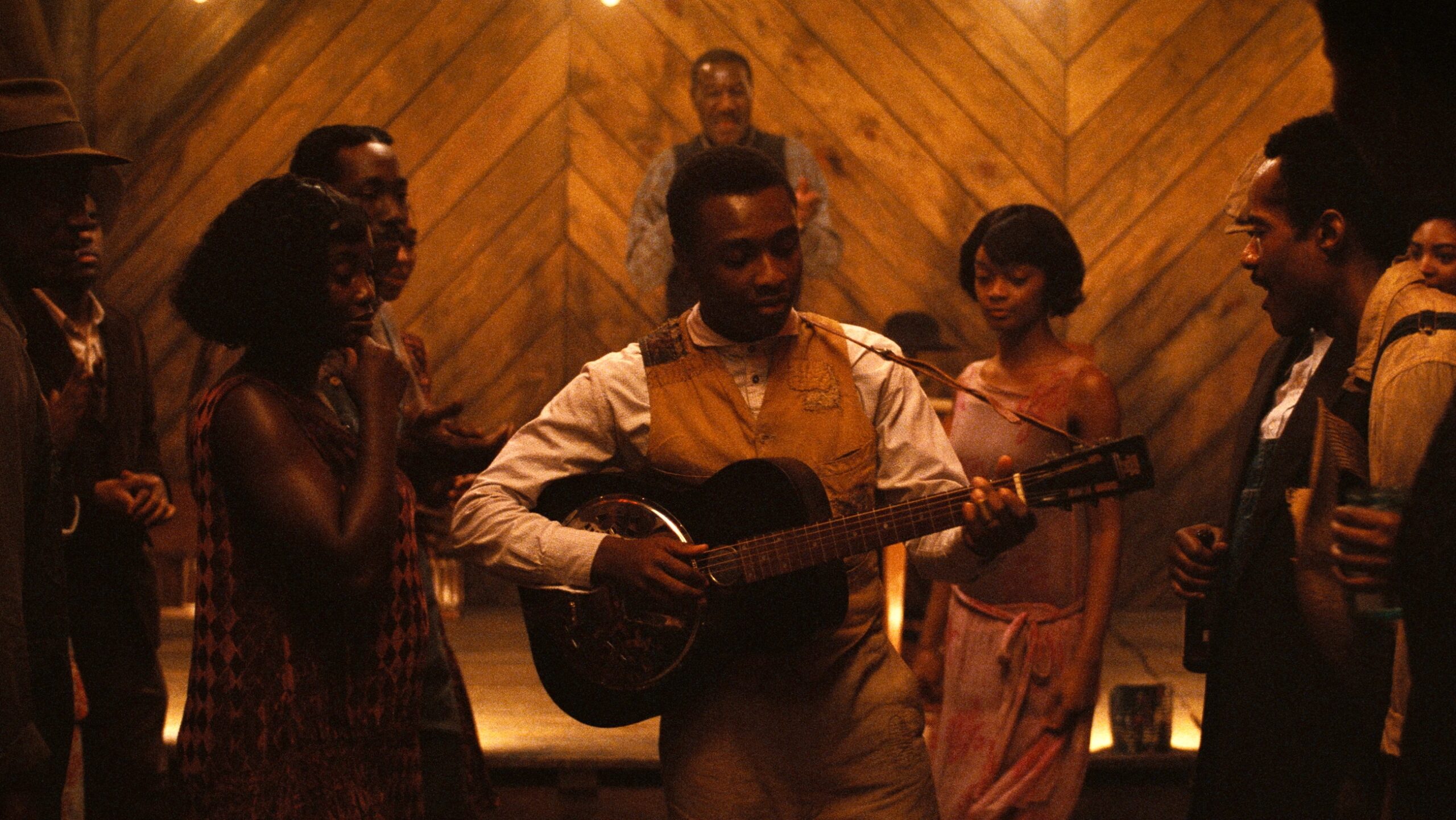
Just because you’re gay does not mean you’re into ballroom. Being a Black queer person doesn’t automatically give you the skill to vogue the house down with the best of them. Let’s say voguing had been included in the Surreal Montage. There still would have been someone declaring that Coogler didn’t do enough. Or that it was a blink-and-you-miss-it moment. I feel that while it would’ve been cool to see Leiomy Maldonado serving alongside Wunmi Mosaku and Jayme Lawson, it would’ve still been judged in some capacity.
What about-ism
Let’s hop to the other side of the argument for a bit. Most of those defending Sinners as it is, feel that this particular criticism picked up steam only after the movie won a lot of accolades during award season. This was a time when the movie was meeting a lot of pushback from racial detractors. They were trying to do and say anything to demean Coogler’s success with the film. Many fans of the movie feel that the momentum behind the film’s success was being hijacked by white individuals playing off the plight of Black queer folx to make the movie center around them in some capacity.
I could see this logic. But again, I found nothing that could prove that theory due to my not seeing many, if any, white people engaging in the posts I saw. Somehow no one brought up this critique with any of the other nominees for Best Picture this past year.
Case in point, Wes Anderson’s One Battle After Another. A movie that starred three powerful Black women and managed to sweep the Oscars without a peep about Black Queer (or even just queer) representation. Nor was Marty Supreme, the Timothee Chalamet film that people were sure was going to win something. So, where was the ask for those films? Why do we not uphold the same standards to white filmmakers that we do with Black filmmakers? And what about the countless Black queer indie filmmakers out here writing, directing, producing, and starring in some damn good movies that could use some eyeballs and support? We are not willing to support Black and Queer filmmakers outside of the studio system. For that reason, we shouldn’t ask someone who is not of the community to pick up the slack for us.
Representation, or the lack thereof
One of the things I was worried about while combing through the dialogue surrounding this discussion was the inevitable true homophobes entering the conversation. Some tweets and posts said it happened, but I luckily didn’t see it firsthand. I personally didn’t want to. But I knew it wasn’t going to be long before someone who looks like me would fix their fingers to tell Black Queer people that they don’t matter.
It’s one of the reasons I embarked on this journey as a Black Queer horror content creator. I want to chronicle and curate the Black Queer experience in horror because we have something to say. No, we have a LOT to say. So, I can see why people felt some type of way about there being no queer people in Sinners. It comes down to having our voices heard. It’s a constant pain to see someone who looks like you tell you that your existence doesn’t matter. You don’t have to blatantly say that for the message to get across.
Which is why it doesn’t take a lot for someone to deem Ryan Coogler a homophobe. Or why it doesn’t take a lot for someone to produce homophobic logic when trying to get a point across. You might not have said the words verbatim, but the hateful message is still delivered.
Let’s chat
Does Sinners have a ‘queer problem’? Again, I’m going to say no. That is not to say that bringing this conversation to the forefront wasn’t necessary. It is very necessary, even if I feel that Sinners and Coogler are the wrong subjects to be analyzed. Coogler had a specific story to tell, and he told it on his own terms. He possibly opened the door for someone else to give us the Black queer horror narrative on the big screen. But we also have to ask ourselves several questions, some that I don’t think we are ready to have truthfully. Until then, we can enjoy Sinners for all that it did right. Hopefully, the movie plants a seed in a Black queer youth somewhere. Maybe someone will produce something just as epic as the tale of the SmokeStack Twins and the Juke Joint.
What say you? Did Ryan Coogler drop the ball on queer representation? Was there a ball to drop?
Let us know!
Queer Problem? Or just another way to dismiss Sinners?
Haters gonna hate
In my opinion, no
What about-ism
Representation, or the lack thereof
Let’s chat
Mark O. Estes
more horror
The Last House // A COVID Story Gone Wrong
The Evil That Binds Us // Y’all Are Cousins: Fantastic Fest 2025 Review
IT: Welcome to Derry // Episode 1 – The Pilot
Abraham’s Boys // Gorgeous Paranoia in the Van Helsing House: Overlook Film Fest 2025 Review
10 Movies We Are Dying To See At Fantasia Film Festival 2024