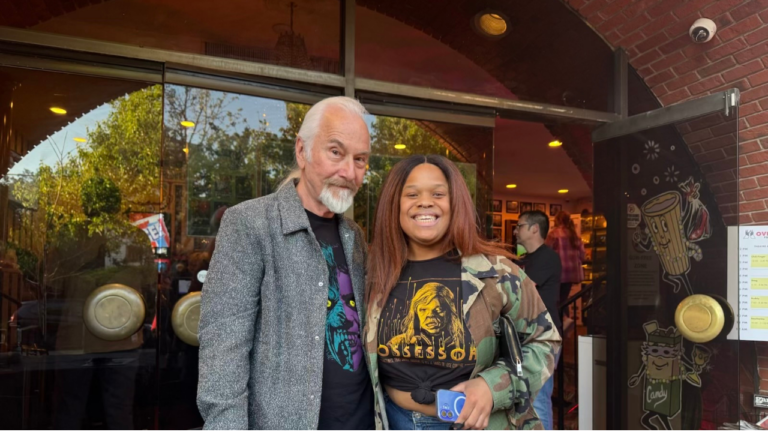
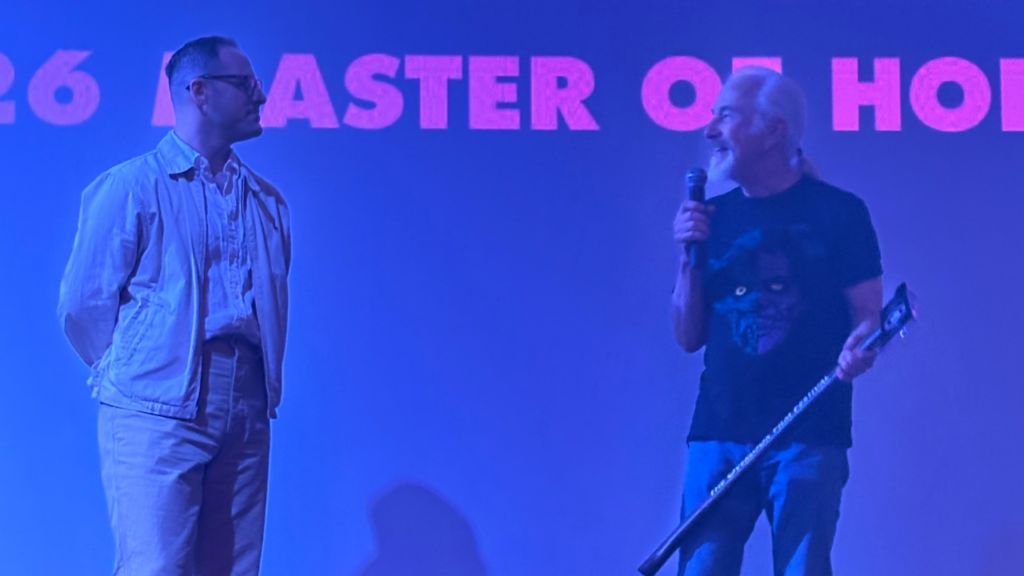
If you know me, you know I love werewolves. It was obvious that I was going to see An American Werewolf in London (1981) on the big screen at Overlook Film Festival, even if it was just me in the crowd (it was a packed house, btw). In addition to seeing one of the most iconic transformations in horror in a theater, we were treated to a Q&A with Rick Baker after the film. He was the 2026 recipient of the Master of Horror award at the Overlook Film Festival, and he deserves every inch of that axe (yes, the award is an axe). From Planet of the Apes to Thriller, his work has inspired generations of special effects artists. It was an experience to watch a movie with a legend in the crowd.
Rick Baker is Simply the Best
Rick Baker’s work is prolific. However, many horror fans will mention how the transformation in An American Werewolf in London planted itself into their brains. It is arguably (although, I don’t know who would argue) the best transformation on screen. I can’t think of many movies that show the change from human to wolf in such detail. We watch the snout expand with sharp teeth pushing to the front. David’s (David Naughton) nails fall off, and claws poke through in their place. His hands stretch to monstrous paws. As he changes, his body hair becomes denser and longer as the transformation progresses. The movie takes its time on the scene, and every minute is worth it.
Everyone raves about the wolf scenes (which they should!), but the ghouls and gore are worth some applause too. Jack (Griffin Dunne) is a victim of David’s brand-new wolf bloodline, and he’s doomed to follow David around as long as he lives. He gets progressively ghoulish throughout the movie. At one point, he’s so decayed that he’s a ghastly puppet being voiced by Dunne. We see plenty of gore from citizens being torn apart by a werewolf. There’s also several fatal car crashes that I totally forgot about! An American Werewolf in London was a blast on the big screen. If you haven’t seen it, you should check it out on Tubi for free because the effects still hold up.
A Bit About the Man Behind the Magic
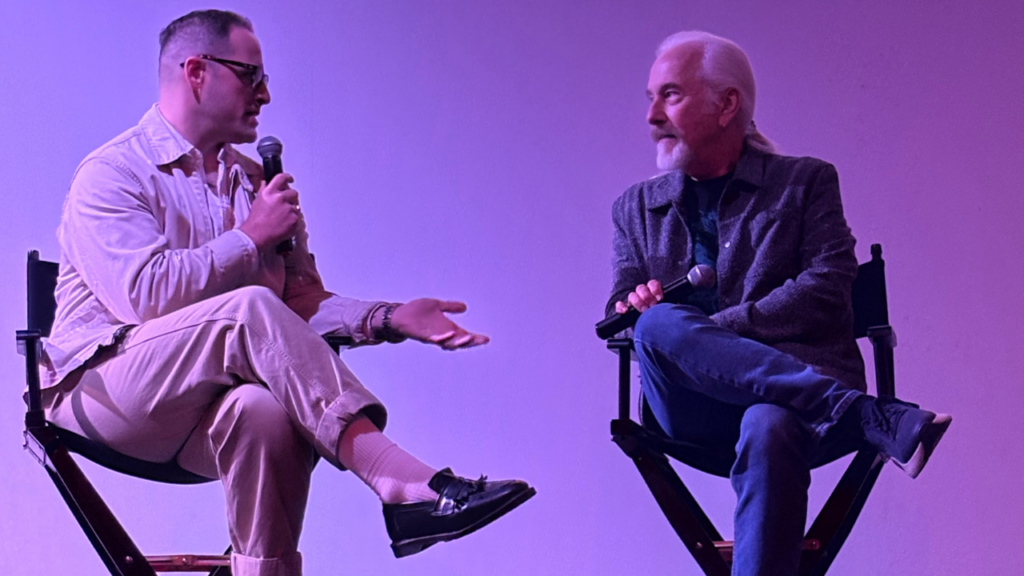
After the film, Baker attributed much of his success to supportive parents, monster movies, horror hosts, horror comics, and shows like Way Out. He talked about experimenting with makeup early, by making fake wounds on the neighborhood kids; using their parents’ reactions for the litmus test of effectiveness. Baker began reading about makeup and gaining experience in stage makeup.
He also told the story about how he wrote to Dick Smith, who did make up for movies and shows like Dial M for Murder, The Godfather, The Exorcist, and Way Out. Baker didn’t expect to get a letter back, but he did! Baker got the opportunity to spend time with him and learn the ropes! His relationship with Dick Smith inspired him to mentor others. I was also able to ask him what’s one of his favorite makeup tricks is during the Q&A, and he eagerly shared some of that knowledge.
Horror isn’t just about who is behind the camera or who’s on screen. Elements like wardrobe, set design, and make-up have the power to build worlds and stretch limits. Rick Baker is behind some of the most incredible effects that computers still can’t mimic. He deserves every flower (or axe) he’s given.