There is a certain kind of horror film that finds its way into the crevices of your own life. It remains rooted in the back of your mind well after you’ve watched it because it doesn’t just resonate with you, but it lives with you. The latest film from the Adams Family, Mother of Flies, is that kind of horror. It serves as a way to break down the stages one goes through when faced with one’s own mortality. The film also explores the reality that the body doesn’t always get with the program, no matter how much we will it to.
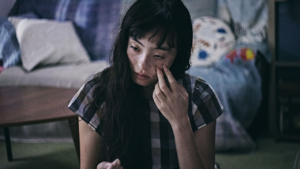
The film follows Mickey (Zelda Adams), who is given six months to live after her cancer returns. She and her skeptical father take to the woods to find healing from a spiritual guide named Solveig (Toby Poser). Mother of Flies takes place over a few days and becomes a ritualistic descent into a story about faith, fear, surrender, and ultimately, survival. What the Adamses do so well with this story is let it live through atmosphere, sound, and silence.
While it’s a story about transformation, it’s not one that comes easily. It asks some hard questions, the ones we naturally avoid because of how difficult they are. Questions about mortality, what we believe, and what we are willing to let go of. I spoke with the Adams Family about crafting horror that feels like its own being and why this story matters.

Horror Movie Blog: When you came up with the story for Mother of Flies, was the emotional core of grief, mortality, and fear of the body failing always the driving force?
Toby Poser: This film was essentially years in the making, as John and I both have histories with cancer. His was over 30 years ago, and mine was 8, but the existence of these facts, and our still being here, have become part of who we are in powerful and wonderful ways. When Zelda learned that she carries my genetic predisposition, we decided it was time to tell our collective “body” story through doing what we love – making movies! – but under our own terms.
So yeah, the emotional resonance of facing scary truths like cancer was always there. But even more so, we were interested in expressing a kind of acceptance. When you can face darkness (even death) and accept that it’s a natural process, you have the choice to fight it, of course, but also to understand it. Bodies die, but they also are magical at their core – that we think and see and feel and love and have a pulse…. Both our living and our dying are fascinating, like very different sisters from the same mother (Nature). We wanted to talk about these dualities.
HMB: There’s so much beauty in that, taking a collective experience such as this one, and one I can understand, as my own father is battling cancer right now, and this journey really hit home for me. In the film, Mickey’s illness is treated with care. How did you navigate portraying cancer without turning it into a spectacle or a generic metaphor?
Toby: Well, first, wind at your dad’s back, Kristie. Something super important for us was to recognize that these stories of illness and medical hardship are two-fold: there’s the person who’s fighting to live… and then there’s the person who LOVES the person fighting to live. This person has their own path to navigate, and it’s also painful and profound. So, we wanted to shine a light on both sides of the equation.
We talked a lot about the risks of telling a story about cancer through the lens of magic, or in this case, necromancy. We knew some might think we were eschewing modern medicine, but this couldn’t be further from the truth. Also, we recognize that modern medicine is its own kind of magic, and we are grateful for it. Chemo and radiation are painful and even illogical on paper, but they save lives. Even the witch Solveig recognizes this. But we are in the business of telling stories, fictional, fanciful, and fearsome stories. So, we mixed truths (ones we understand from our own real-life experiences) and fantasy for our own catharsis. Mother of Flies is a story about a human body on the brink of death, and about a woman, a death worker, who understands that darkness intimately.
HMB: Hearing this and seeing the film bridges it all together. I think this is what I loved most about these characters, the authenticity with the fantastical. Speaking of which, this question is for Zelda. Your performance as Mickey is raw and also physically demanding. How did you approach this performance, especially given the vulnerability it had to take?
Zelda Adams: First of all, thank you! That means so much to me. For me, this was the most challenging role I had taken on yet, so I knew I was going to have to push myself more than I had in the past. A huge help for me to do this was my parents, who were very honest and insightful about their experiences with cancer. It felt extremely intimate to use their stories and emotions in my role for Mickey, which naturally aided the vulnerability of a lot of the scenes. It was really important to me and my parents to show Mickey’s sadness and vulnerability, but also her strength too. (And my bonus answer: I also put oil in my eyes, and that helps kickstart any tears. Once the tears start, my body goes into survival mode and starts ACTING!)

HMB: I can imagine there’s a freedom in acting alongside and filming with your family, especially on something that is based on your family’s own experiences.
Zelda: Nothing made me feel more empowered in my role (and as a daughter) than being on set with my family and just feeling comfortable to go there and not feel silly for being expressive, intense, extreme, or subtle. Luckily, there’s no feeling silly when you’re acting with your family.
HMB: I love that. And Toby, your character Solveig is both nurturing and unsettling. How did you balance warmth and menace in that portrayal without tipping fully into one or the other? Did you tap into anything/anyone in particular?
Toby: I’m glad you registered both, thanks! I’ve always been intrigued by the concept of what a “witch” is. Sometimes she’s a maligned figure, but often that’s a historical travesty plucked right out of “Fear of Women Who Know Things 101.” And sometimes she’s a mystic or a healer or someone who is very in tune with Nature and the universe’s spin. Either way, I find the duality compelling – is she someone to fear or to embrace? Ideally both?
Solveig is a healer, which means she cares deeply. As a necromancer, she even understands that Death craves a little light. But she’s also been around a very long time and has seen human nature and hypocrisy at its worst. And as Solveig says, one person’s curse is another’s gift. So she’s both sinister and sympathetic. I sought inspiration from strong women in lore like Lilith and Kali Ma, but honestly, I didn’t need to look far to be inspired by so many of the cool, fierce women I know in the horror community. They’re lovable and wicked in equal measure, and I learn from them all the time.
HMB: I think you handled that duality well, and we need more witches portrayed this way in the media. Let’s talk more about the makings of Mother of Flies. The storytelling here relies on ritual, symbols, and unspoken rules rather than exposition. What draws you to ambiguity as a storytelling tool, and how do you know when to hold things back and when to reveal?
Toby: I think there’s something to be said about trusting audiences to make their own interpretations when it comes to the magic or mythologies we present in our films. We dig deeply into our own intuition or playful imagination when we build the magical world in all of our films. There’s a definite logic to us, but we don’t feel the need to offer concrete answers.
Part of the fun is planting seeds that grow in unique ways for each viewer. I love a character that challenges me to both love and hate who they are. I also love when people have differing views about the moral fabric of our characters or even what our films are about. For me, a wick of ambiguity is sexy. It’s more the structure of human interaction that calls for more clarity. What are the facts of this person being here now at this moment, and why are they fighting for xy? But the real fun in making folk horror is devising the spells, sigils, and magic rituals.
For those, it’s all about taking cues from Mother Nature herself (the cycles of life and death, the magic of rot, ruin, and rebirth) and then letting the kid in us run rampant. If you give away the magic trick, is it still magic?
HMB: That’s a great way to look at it. Does that draw you to these types of themes? For example, transformation is a recurring motif in your work, but here it feels intimate, magical (and painful). What does bodily transformation represent to you in this film? Why has it become something you return to in your work?
John Adams: Body transformation has definitely played a role in all our films. Most of the time, it’s symbolic of the changing family dynamic, but in this film, it’s about individual evolution. The brutality that the human body goes through to fight for life. In this case, both Solveig’s body and Mickey’s body are battling their own bodies for survival as they walk the tightrope between life and death.
HMB: I think that evolution is evident and well communicated through these characters and their journeys. Thank you all so much for your time and willingness to share such vulnerable aspects of your filmmaking process with this project. One last question: if there was one idea, one question, or answer you want viewers to walk away from Mother of Flies with, what would that be?
John: I think the most important idea in this film is that death is as beautiful as life. They are one and the same, swirling in a circle…inescapable.
In speaking with the Adams Family, it’s clear that their work is not just rooted in horror but also in honesty and vulnerability. There’s a shared commitment in portraying work that they can be proud of, which is evident with Mother of Flies. It’s not so much about the details but what remains after.