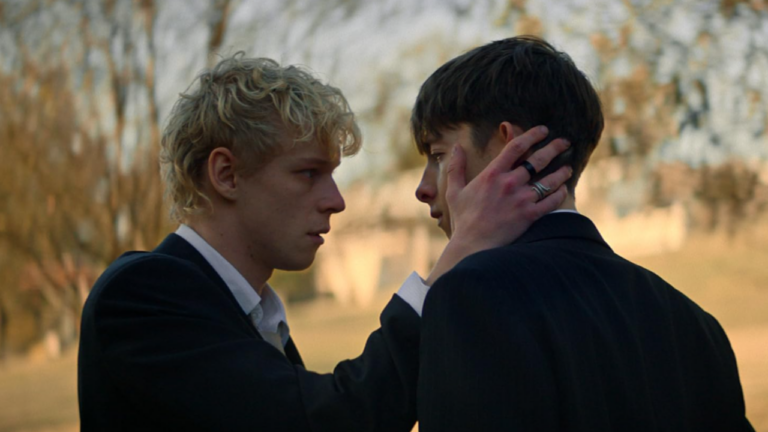
I decided to see Leviticus on whim at the Overlook Film Festival, and I’m happy that I did! I went into the movie completely blind and learned during the introduction of the movie that it was an Australian film. So, I expected realistic brutality. I also discovered that it starred Joe Bird from Talk to Me, which was one of my favorite movies from 2023.
What Follows
Leviticus follows teenage boys who try to escape an entity that takes the shape of the person they desire most. It feels inspired by It Follows, but I appreciate how we learn more about the entity and its rules. The tension had me clenching my fists, and the scares made me nearly jump out of my seat. I loved that we focused on queer protagonists, but I’m not sure how I feel about them getting hate-crimed for the plot. I still think Leviticus is worth your time, but sometimes it’s very difficult to watch.
First I want to commend the performances. Joe Bird and Stacy Clausen put the film on their backs, because we spend the most time with them. Many of the scenes hinge on drama, romance, and fear, which these actors nailed. They also had to play two versions of themselves, delicately switching back and forth between amorous and murderous at the blink of an eye. I expected more explosive moments between the kids and their parents. However the quiet or unsaid tension reminded me how hushed hate can be when it lives at home with you. The parents quietly watched their children suffer from their decisions, only showing regret once it was too late. However, the regret felt attached to their child’s lifestyle and who they were connected with instead of the harm they caused.
Why It Works
I love how Leviticus displayed the harm of weaponized religion at work. I recently watched Godless: The Eastfield Exorcism, and the plot involved “curing” someone with extreme religious rituals at the expense of the “afflicted” person’s safety. The small church allowed this, even when it was clear that harm was being done. The members at Naim (Bird) and Ryan’s (Clausen) church watched a traumatic event. They wept, yet they didn’t force the preacher to stop. In fact, he was called upon again, because the parents genuinely think they are helping their kids. Meanwhile, they are actually torturing them under the guise of salvation. I also noticed how most people didn’t step in to help. Bystanders watched with concern, but rarely approached the teens; except at school, because then they are legally responsible for the students. Naim and Ryan often seemed to be alone, even when they were surrounded by people.
While revealing the dark side of religion Leviticus also manages to be scary as hell! The scares are so effective, because the tension is cranked up to the max. The stress of the social interactions piles on from the beginning of the movie and never truly lets up. We start the movie with aggression and a budding secret romance before we are thrown into a love triangle. Then Naim makes a choice to purposely hurt Ryan, but he kept it a secret (I love a little dramatic irony). The guilt bears down on Naim as he watches Ryan suffer. School bullies and family members make sure to exacerbate the weight of his guilt.
Many Monsters at Play
Mixed in with all the social drama, is a real monster! The entity wastes no time tormenting the teens after they are seen by the Deliverance Preacher (Nicholas Hope). The ritual isn’t for show, and the stakes are high, because the entity will kill if it’s allowed the opportunity. It takes the shape of our main characters often, so I was on the edge of my seat every time they were together. I also couldn’t relax anytime Naim or Ryan were alone. I was already tense and primed for the well placed scares. Many of the scares were accompanied by violence, which heightened them. If scares consistently appear without danger, I start to feel like they are just for decoration.
I love that the entity has a weakness that isn’t discovered during a research scene. I appreciate how Naim tries to redeem himself, but I don’t know if I’m satisfied with the status of their relationship by the end of the movie. It’s believable, because teenagers are chaotic. The teen drama mixes well with the horror, however, it was difficult to watch the queer characters get dragged through hell in a handbasket.