If you’re a fan of the Souls series games, especially its sister game SEKIRO: Shadows Die Twice, and anime is your flavor for amazing adaptations (they do it so well), then SEKIRO: No Defeat is made for you, especially.
As an avid anime fan, I was pleasantly surprised to see fairly new studio Qzil.la take up the task to adapt the popular action-horror-mythology game. SEKIRO: No Defeat chooses only one of the game’s endings. It also focuses on the Dragon Blood’s Heir Kuro-sama to set the pacing and perspective. In the game, you follow everything from the perspective of the player as SEKIRO/Wolf/Okami.
Mortal Blades and Immortal Heirs
The story of SEKIRO is steeped deep in influences from Buddhism and Japanese folklore, such as Dragons (Ryũ), Okami, Shinobu, as well as post-WWII “Chanbara” (sword-fighting) films.
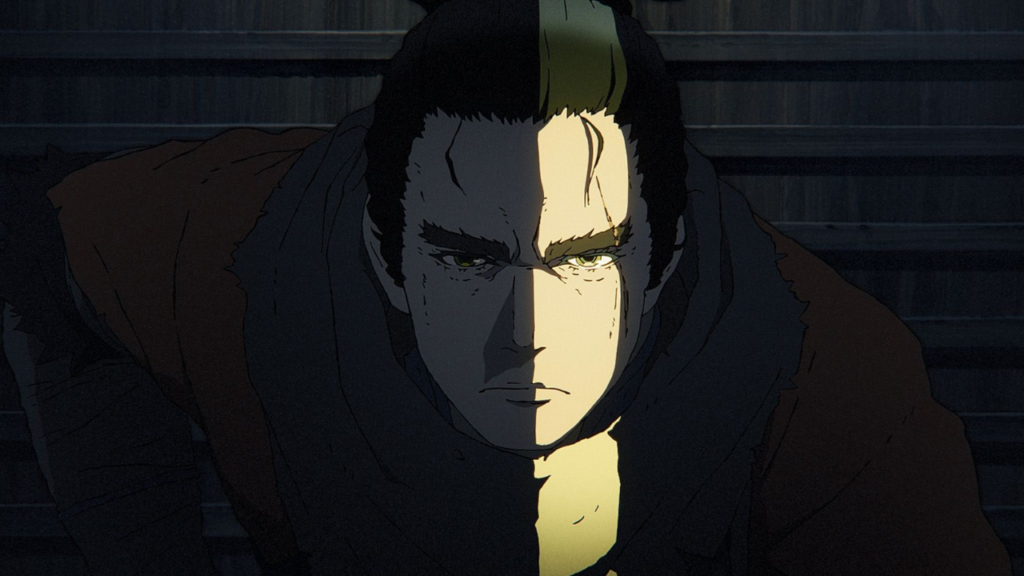
We follow Kuro-sama and Okami(Wolf), aka Sekiro, embroiled in a conflict that will decide the fate of the Ashina clan. Kuro is the last of a Divine Dragon’s lineage, and Okami is his shinobi, sworn to protect him. During their quest to free Kuro from the hands of the Ashina grandson Genichiro (voiced by the legendary Kenjiro Tsuda)and prevent him from raising an immortal army, Okami ends up losing one arm and thereafter gains his new name Sekiro. The word “sekirō” (隻狼) is a contraction of “sekiwan no ōkami” (隻腕の狼), which translates as “one-armed wolf.” The blessing the heir carries is also a curse. For each Revival, there is a cost drawn immediately from those around, which manifests in the disease ‘Dragonrot’.
Kuro and Sekiro receive help from the healer Emma and several other characters while they figure out what to do with the ‘blessing’ the Dragon heir possesses and how to make sure it cannot be abused to curse and kill innocents.
Meanwhile, due to his greed for power, Genichiro loses more and more of his humanity while ignoring the consequences. The story follows all the beats from the game, but with ‘less meat’ because you only follow Kuro. In the end, one of the original endings of the game, called Purification, is where the story leads us. It’s a beautiful, but very bloody, story of loyalty, friendship, discovery of self-worth, and betrayal in hierarchy. In the end, Kuro is alone, bearing the weight of everyone’s sacrifice to live on in the world.
Styles and Influences
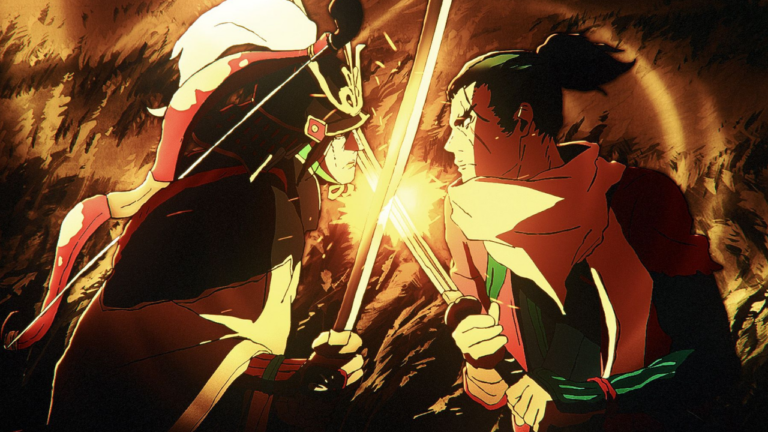
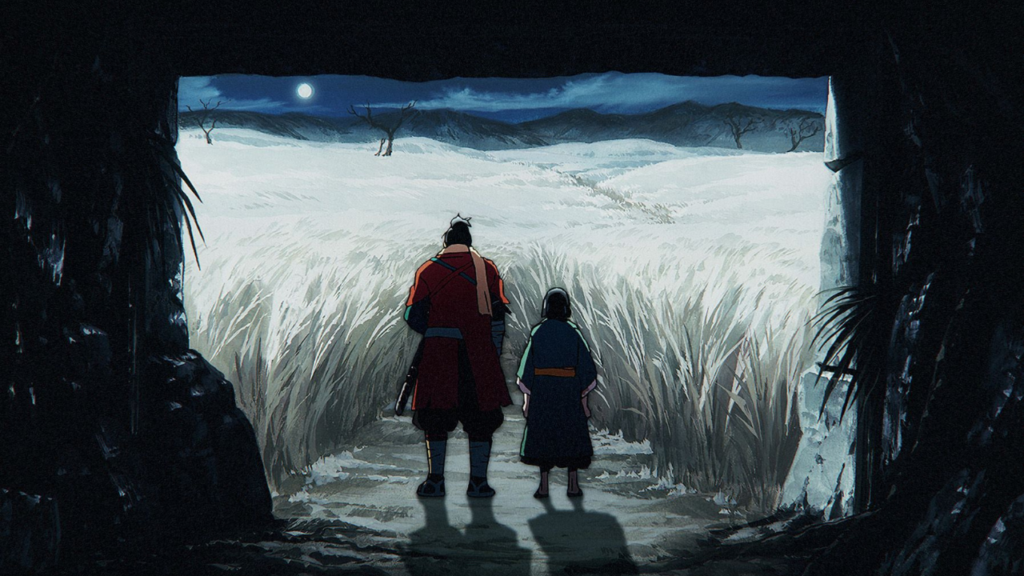
The art style of the SEKIRO animation is gorgeous and really complements the source material. Qzil.la is fairly new on the broader anime market as a studio, and this adaptation is their big coming out to a more mainstream audience. While watching, I was slightly reminded of a few older ‘Chanbara’ movies such as Zatoichi and The Hidden Blade, as well as some of my favourite period-anime Inuyasha. Especially some of the fighting scenes between Sekiro and Genichiro were really impressive in movement and flow. It is an interesting choice to keep the focus on Kuro instead of Sekiro himself. However, this made the pacing of the story more workable for an adaptation at the same time. The pacing of the game is very different, and you get more characters and backstory. So, if SEKIRO: No Defeat has sparked your interest, I would encourage playing the game.
All in all, SEKIRO: No Defeat gave me my samurai x folklore fix. I look forward to seeing more from studio Qzil.la.